
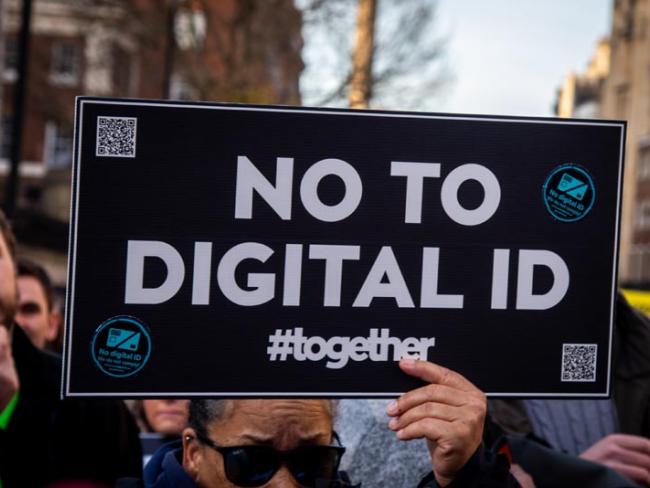
London, 13 December 2025: protestors at the Say No To Digital ID march. Photo 2025 Loredana Sangiuliano/Shutterstock.
Civil liberties groups are concerned that government might use Digital ID to intrude into people’s privacy and data security, and to interfere in their lives. Eight organisations, including Big Brother Watch, have informed the prime minister that the plan will “push unauthorised migrants further into the shadows”.
On the UK parliament website, over 2.9 million people have signed a petition against Digital ID cards.
Former Conservative cabinet minister David Davis said “no system is immune to failure” and warned that previous government and tech companies’ failures to protect people’s data show that the bill shouldn’t be introduced.
Tony Blair’s Labour government introduced voluntary cards in the early 2000s but the Conservative-led coalition removed the scheme in 2011 because it was expensive and intrusive.
Keir Starmer denied that digital ID would ever be used for surveillance – and said the scheme would “absolutely have very strong encryption”. He claimed that for additional security, the ID would be held on individual devices rather than stored in third party data centres.
Britain has only had compulsory ID cards during wartime. Although they stayed in place for several years after World War Two, Winston Churchill’s government scrapped them in 1952 after criticisms about their costs and their use by police.
Digital ID’s “Right to Work” and “Right to Rent” checks would push illegal migrants towards dangerous housing and exploitative work off the books. It would not stop criminal trafficking. Smuggling agents lie to migrants that they will have a high quality of life in Britain, and the migrants are usually unaware of policies and practices here.
Using a single unique identifier to record any interaction (including credit history, transaction data and browsing history) with public and private services via “BritCard”, biometric data would allow sensitive data to be exposed, risking population-wide policing and surrender of our privacy rights.
A report by Big Brother Watch has challenged the government’s claims that digital ID would tackle unauthorised immigration. The report also scrutinised ID’s other proposed uses, and spells out the dangers to civil liberties, privacy, and other basic human rights.
• Related article: Stop the scrapping of jury trials! Speak out!