
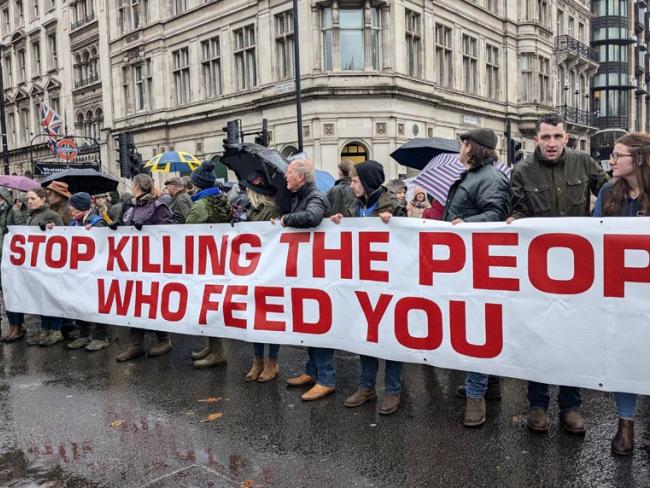
Farmers demonstrating in Whitehall, 2024. Photo Workers.
The Starmer government’s “reset” with the EU threatens to undermine food standards and production in Britain in the name of removing trade barriers and its unshakeable assumption that Brexit has been a disadvantage.
Britain will adopt new EU food regulations. The stated aim is to boost trade and reduce red tape for exporters. The real result is increased costs and to align Britain even more with EU regulations, as shown in Starmer’s announcement on 13 April.
Some media reports, and some politicians, suggest the EU food deal means marmalade sold in British shops will have to be re-labelled. This is not true. The EU is widening the legal definition of “marmalade” from June, but marmalade in British shops is already usually labelled as orange or lemon marmalade, within the EU directive.
But this false panic is beside the point. The marmalade ruling is only one of 76 updated EU food-related laws that would apply in Britain if the EU food deal is implemented (in mid-2027 if Labour ministers get their way).
Many other impacts are less benign – threatening food security, as many people and organisations have pointed out since the deal was touted last year.
Britain will have no effective say in new regulations, no matter how inappropriate they are. The EU’s attitude is take it or leave it – that’s what “dynamic alignment” means.
And alignment with the EU brings an immediate regulatory cost – the opposite of what the government claims. It would also constrain advances in gene-edited crops (“precision breeding”), a few years after Britain was freed from the EU’s backward and restrictive policy.
Crop yields will also be hit with unnecessary restrictions on the use of plant control chemicals – as highlighted by a parliamentary committee in February. And the deal could undermine Britain’s high domestic standards for agriculture and animal welfare.